| |
Adult Classes and Trips
For assistance with registration please contact the Reservations Coordinator at education@desertmuseum.org / 520-883-3025.
Northern Spain via the Slow Train September 10 – 24, 2026
.jpg) | Cider, Bronze-Age Castros and Mining, Paleolithic Caves, Sea Cliffs, el Camino de Santiago, the Guggenheim, Iberian Geology, Fishing Villages, Local Wines, Asturian and Basque Gastronomy The rain in Spain falls mainly north of the plain. And that is why the land is emerald green. This is the land that the Celts originated from, and that the Basques continue to inhabit. On this tour we learn about Bronze Age castros, Roman gold and iron mining, and Asturian and Cantabrian traditional lifeways. As a counterpoint to the old, we visit Bilbao’s Guggenheim Museum of modern art, and learn about and taste Basque culture. We explore the hinterlands of farms, forests and hamlets, crisscrossing the Camino de Santiago. Our coastal route follows the narrow-gauge local train, the FEVE, from which we hop on and off for stays at seaside towns, where we drink apple cider and enjoy regional seafood and Asturian fabada. Then there is the fairytale scenery: the northern edge of the peninsula falls dramatically into the Cantabrian Sea in steeply tilted rock walls. To complement the landscape, we share lessons on the geology of the Iberian Peninsula. Itinerary and Trip Details Prices and Registration Details |
Rancho de la Osa
November 6 - 8, 2026 | | It rests in the desert grasslands along Arizona’s southern border with the dramatic backdrop of Baboquivari Peak always in view. On this tour, we visit the Buenos Aires National Wildlife Refuge, which has breeding programs for the endangered pronghorn and Masked Bobwhite Quail and offers birding for many species including Herons, Gray Hawks, Vermilion Fly Catchers, Loggerhead Shrikes and Golden Eagles. We will take in a lot of local history, learning about the Spanish Barb horses that descend from Fr. Kino’s herd, about the Mexican Revolution as it was played out here, and about old ghost towns and mining camps. We take a side trip to see the border town of Sasabe, sprinkle geology lessons in, have a morning free for optional activities such as riding e-bikes or horses, and enjoy fabulous meals. Come nighttime, we are treated to cowboy poetry and a star-studded winter sky. Itinerary and Trip Details Prices and Registration Details |
Rainwater Harvesting Tour
November 14, 2026  | In the Australian Outback everyone does it. In the Sonoran Desert the rain, in vain, falls mainly down the drain. But, not for everyone! See how this bounty can be harvested in a small park, on neighborhood tree-lined streets, in urban homes. Calculate how much water can be collected off of your own roof and find out about various options for storage and diversion. Participants will learn about and see many strategies they can apply at their own home and neighborhoods. The tour will be entirely outdoors. Prices and Registration Details |
Black Lava White Sand
December 6 - 9, 2026  | Explore El Pinacate y Gran Desierto de Altar Biosphere Reserve, a UNESCO World Heritage site, with retired Arizona-Sonora Desert Museum cultural conservationist Jesús García and geomorphologist/anthropologist Fred Nials. The volcanic landscape of the Pinacates includes huge maar craters, two varieties of lava flows, cinder cones, and majestic shifting dunes hosting their own specialized ecosystems. This young volcanic field is adjacent to the Sea of Cortez, which, because of extremely low tides, allows viewing of its marvelous intertidal marine life at the Center for the Study of Deserts and Oceans. Uniting the desert and the beach is Campo La Salina, one of the most important natural salt reserves in Mexico. Located in Gulfo de Santa Clara where natural freshwater springs and saltwater meet, this layer of salt is sacred to the Tohono O’odham and is an important oasis along the ancient salt pilgrimage trail to the sea. Itinerary and Trip Details Prices and Registration Details |
Land of the Seri
February 18 - 22, 2027  | Travel with the Arizona-Sonora Desert Museum this February to explore the world of the Seri people. Our guides, cultural conservationist Jesús García, and geomorphologist/anthropologist Fred Nials, enthusiastically share with us the culture of this desert people as well as the natural and geological history of the Central Gulf Coast subdivision of the Sonoran Desert. Our voyage of discovery includes the Seri Museum in Nuevo Bahía Kino, a visit to the Prescott College Research Station, a panga ride to the mangroves of Isla Tiburón, birding in the estuary of Laguna de la Cruz, a walk in a cardón forest, and, of course, meetings with the Seri people themselves, with a very special opportunity to participate in the Indigenous Language Day Festival. Our adventure also includes time on the beach at Kino Bay, with its intensely blue waters, as well as daily helpings of fresh seafood and opportunities to support the Seri by purchasing their handicrafts. Itinerary and Trip Details Prices and Registration Details |
Costa Rica: Biodiversity, Art and Ecological Connections February 27 – March 7, 2027 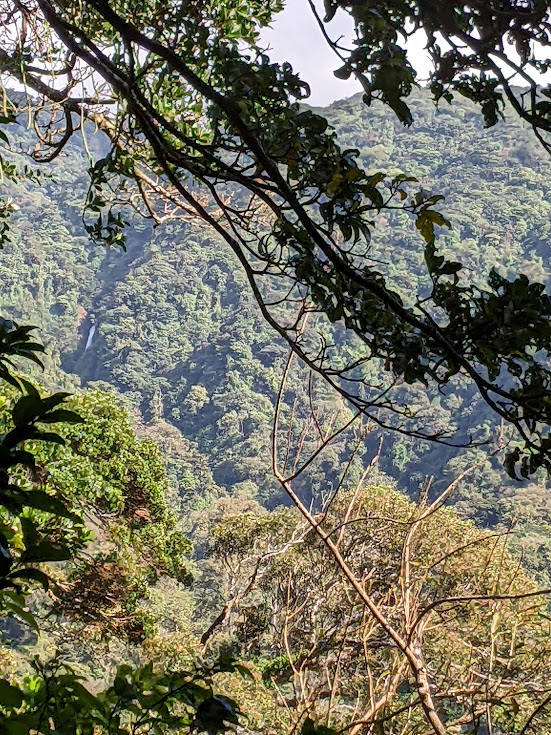 | Join the Desert Museum and its Costa Rican partner, the Monteverde Institute, for an unforgettable exploration of extraordinary landscapes, biodiversity, and conservation. Tiny Costa Rica holds an astonishing 5% of the world’s species and protects a quarter of its land area in parks and preserves. This journey takes us through some of its most diverse ecosystems, from coast to cloud forest, while using nature journaling as a tool for observation and discovery. Along the way, Desert Museum naturalists reveal surprising connections between Costa Rica's tropical environments and the Sonoran Desert, offering a perspective few travelers experience. We visit key birthplaces of the country’s conservation ethos and explore their legacies of habitat protection and restoration. Through guided field excursions, we encounter remarkable plants and animals such as bromeliads, blue-crowned motmots, and white-faced monkeys. Most importantly, we meet local biologists, farmers, and community members dedicated to celebrating and safeguarding biodiversity to create sustainable livelihoods for people and the natural world upon which we all depend. | March 26 - April 8, 2027 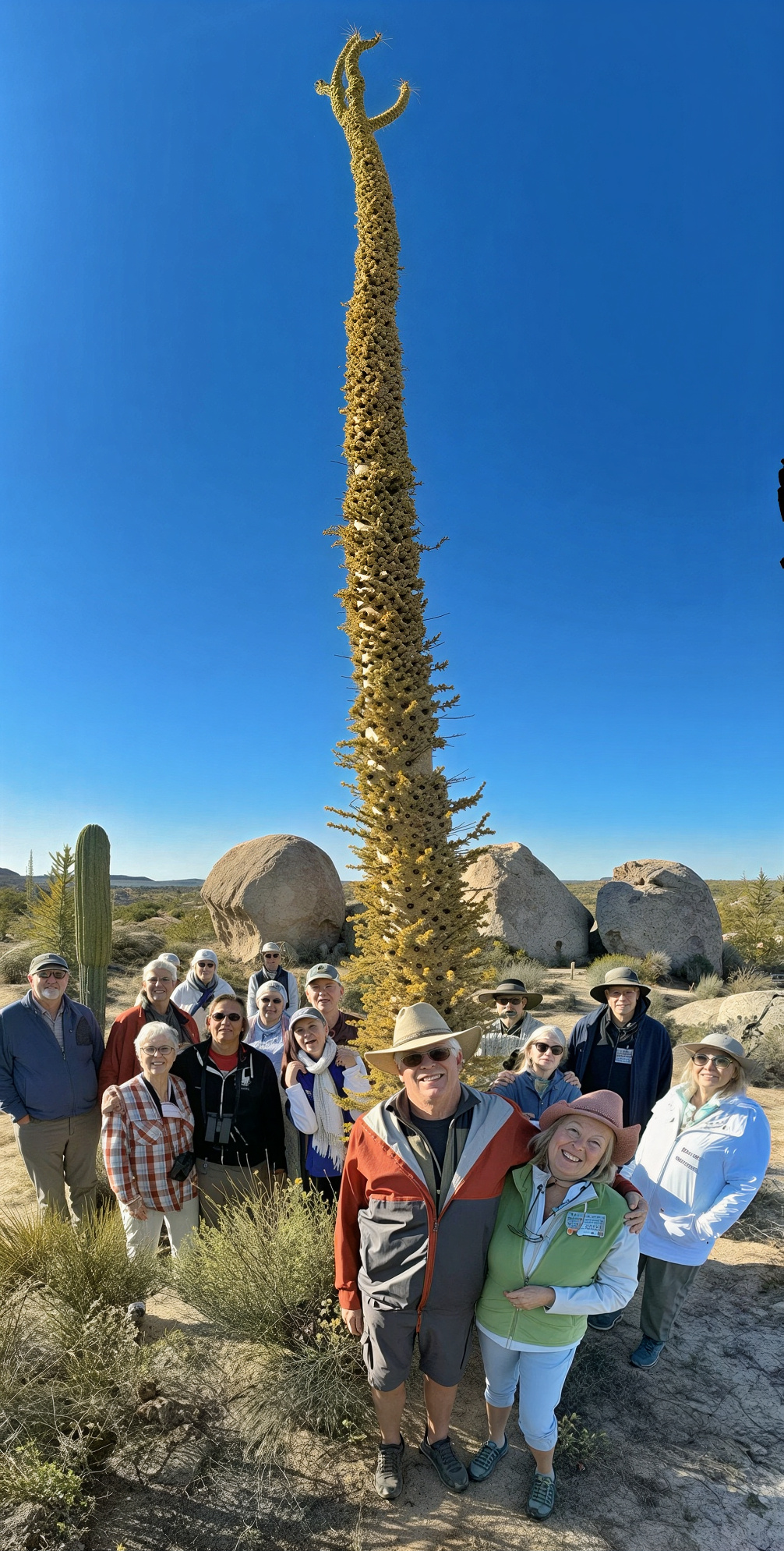 | Ecology, Geology, Birding, Whale Watching, Cowboys, and Ethnobotany Led by the incomparable Jesús García and geologist/raconteur, Fred Nials, we travel by motorcoach down the entire length of the Baja Peninsula. The fertile Valle Guadalupe of grape and olive orchards leads into the captivating Cataviña desert with amazing forests of boojum, elephant trees, and cardón. We dedicate a full day to Guerrero Negro and Laguna Ojo de Liebre, one of the world's premier gray whale sanctuaries, offering close-up encounters that are legendary. Surrounded by a lush date palm oasis, our stay in San Ignacío includes a visit to pictographs, to the Tres Vírgenes volcanic field and the aquamarine coves and gorgeous white-sand beaches of the Gulf of California. We enjoy three nights on a beautiful beach resort at Loreto Bay, with visits to some of the oldest Franciscan and Jesuit Churches on the peninsula. An exhilarating day trip by panga to Isla Coronado, an uninhabited volcanic island known for its abundant wildlife, is just 7 miles off the coast. In the southern cape we experience the charming mining community of El Triumfo where we learn about the Vaquero culture. The artists’ havens of Todos Santos and San José del Cabo as well as the famous Los Arcos geologic formation at the southern tip of Baja culminate this outstanding tour of the entire peninsula! Our return is by air. |
Mesa Verde and Chaco Canyon Ancestral Pueblo Cliff Dwellings and Monumental Great Houses April 26 – May 3, 2027  | Explore the most significant archaeological geography in the United States. Our tour focuses on Puebloan archeological sites of southwest Colorado and northwestern New Mexico. Ancestral Puebloans blended work and worship; they were master artisans, farmers, astronomers, traders, and skilled engineers, creating an extensive trade network throughout the San Juan Basin and beyond. Highlights include two days at UNESCO World Heritage sites, Mesa Verde and Chaco Canyon National Parks, as well as Monument Valley, Aztec Ruins, and the seldom-visited sites of Hovenweep and Lowry House ruins. The tour culminates with two nights at the former Harvey House, La Posada in Winslow, with a stop in Gallup at the Hubbell Rug Auction on our way to Winslow. Our personal guides are naturalist Jesús García and geologist/geomorphologist Fred Nials, highly educated in Native American history and in the fields of archaeology and anthropology. This exceptional tour experience offers a unique opportunity to visit a vibrant archeological region with expert interpretation. | |
|
|
| |
| |